
Many parents notice something confusing during their child’s speech development.
Their child can recite rhymes, repeat advertisements, copy movie dialogues, or repeat long sentences perfectly. But when it comes to real communication—asking for water, answering a question, expressing feelings, or interacting with others—the child struggles.
This often leads parents to ask:
“How can my child talk so much, yet not communicate?”
This concern is valid—and common.
The answer lies in understanding the difference between speech and communication.
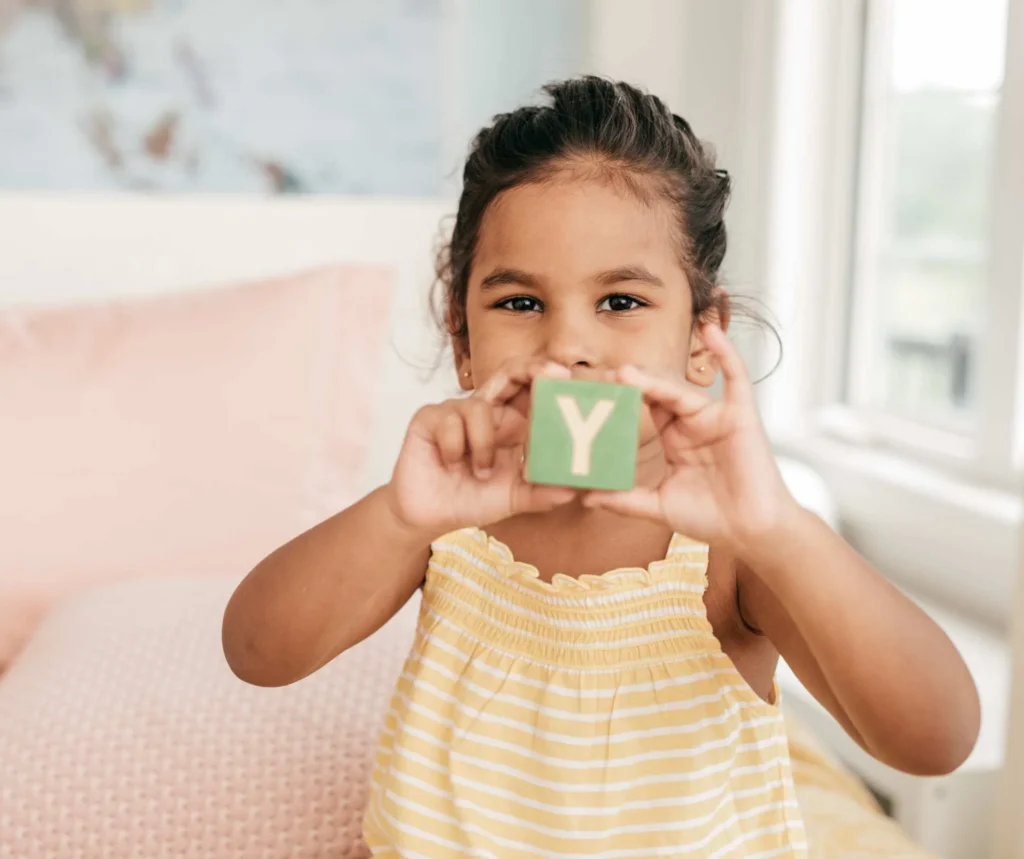
Speech vs Communication: They Are Not the Same
Many people assume that if a child can speak, they are communicating. In reality, these are two different skills.
Speech
Speech is the ability to say words, sounds, or sentences.
Communication
Communication is the ability to use language meaningfully to:
- Express needs
- Share ideas
- Show emotions
- Interact socially
A child may have speech without true communication.
This often happens when a child:
- Recites memorized content
- Repeats what they hear (echolalia)
- Scripts lines from cartoons or ads
- Uses full sentences without understanding their purpose
These abilities show strong memory skills, but communication requires intent, understanding, and social connection—not just speaking.

Why Does This Happen? Common Reasons
1. Strong Rote Memory but Weak Functional Language
Some children have excellent rote memory. They quickly memorize:
- Rhymes
- Songs
- Dialogues
- Advertisements
They may enjoy rhythm, repetition, music, or patterns.
However, they struggle to use language for functional purposes, such as:
- Requesting (“I want water”)
- Greeting (“Hi”, “Bye”)
- Answering questions
- Expressing emotions
- Having conversations
This gap between reciting and communicating is very common in children with communication delays.
2. Echolalia (Immediate or Delayed Repetition)
Repeating what others say is called echolalia.
Examples include:
- Adult: “Do you want juice?”
Child: “Do you want juice?” - Repeating rhymes when excited
- Using cartoon dialogues during play
Echolalia can be immediate or delayed.
It is important to understand:
👉 Echolalia is not a bad sign.
In many children, it is a step toward meaningful language.
However, the child still needs guidance to move from:
repeating → understanding → using language independently
3. Limited Social Communication Skills
Communication is more than words. It requires social skills such as:
- Eye contact
- Joint attention (looking at an object and a person)
- Understanding social cues
- Turn-taking
When these skills are weak, a child may speak but not communicate effectively.
This pattern is often seen in children with:
- Autism Spectrum Disorder
- Social Communication Disorder
- Expressive language delay

4. Difficulty Generating Original Sentences
Reciting is easier because the sentence is already stored in memory.
But creating a new sentence requires:
- Vocabulary
- Grammar
- Cognitive flexibility
- Understanding of context
Children who rely heavily on memorized phrases may struggle to generate original language.
They know what to repeat, but not how to create.
5. Limited Motivation to Communicate
Some children do not feel the need to communicate because:
- Their needs are anticipated quickly
- Screens provide structured language
- They prefer independent play
- They enjoy music, visuals, or patterns more than interaction
Communication develops best when a child needs and wants to interact.
Signs a Child Is Reciting but Not Communicating
You may notice:
- Recites rhymes but does not request
- Repeats phrases instead of answering questions
- Uses scripted language out of context
- Rarely initiates communication
- Limited eye contact or turn-taking
- Difficulty naming needs (water, help, toy)
- Speech without social use
If several of these signs are present, a speech-language evaluation is recommended.
How to Support Communication at Home
1. Focus on Communication, Not Perfect Speech
Accept all attempts at communication:
- Gestures
- Pointing
- Sounds
- Single words
Communication comes before clarity.
2. Create Real Communication Opportunities
Build situations where the child needs to communicate.
Examples:
- Hold the snack box and wait
- Give a little food and pause
- Keep a favourite toy in a closed box
The goal is to encourage initiation, not repetition.
3. Model Meaningful Language
Instead of forcing repetition:
“Say apple! Say apple!”
Try functional modelling:
“You want apple? Apple! Here is apple.”
This teaches purpose, not just words.
4. Use Visual Supports
Pictures, gestures, objects, and simple signs:
- Reduce pressure
- Improve understanding
- Support expression
Visuals are powerful tools for children who struggle with communication.
5. Use Play-Based Interaction
Play is the most effective way to build functional language.
Try:
- Rolling a ball
- Bubbles
- Toy feeding
- Pretend play
During play, comment simply:
- “Ball go!”
- “Baby eat!”
- “Push car!”
This builds language naturally.
6. Reduce Screen Time
Excessive screen exposure increases:
- Scripted language
- Echolalia
- Reduced social interaction
Real interaction is essential for communication growth.
7. Seek Early Speech Therapy
A speech-language pathologist can help your child:
- Move from echolalia to meaningful speech
- Build joint attention
- Improve social communication
- Develop spontaneous language
- Strengthen functional vocabulary
Early intervention leads to better outcomes.
Conclusion
When a child recites rhymes or repeats sentences but does not communicate, it does not mean the child cannot learn language. It means the child is using memory-based speech, not functional communication—yet.
Speech is about saying words.
Communication is about using words with purpose.
With the right environment, modelling, play-based interaction, and early therapy, children can move from memorized speech to true, meaningful communication.
Every child has a voice.
Sometimes, they just need the right support to use it.
Dr. Sudharani
Senior Speech Therapist.